EN
EN



Water Treatment
Reliable filtration and desanding for plant intake, cooling, reuse & demineralized water.
In industrial water treatment systems, sand, suspended solids, colloids, and biological slime carried by water are primary causes of pump wear, heat exchanger fouling, membrane clogging, and pipeline corrosion — directly impacting production continuity and energy efficiency. CREST provides end-to-end filtration and desanding solutions covering raw water intake, circulating cooling, reclaimed water reuse, Desalination and demineralized water production. With high separation efficiency, automatic operation, and low maintenance costs, our solutions help users extend equipment life, reduce downtime risks, and achieve water conservation and emission reduction — delivering reliable protection for safe and efficient water system operation.
Key Applications
Plant Water Intake – Desanding & Pre-Filtration
Process:
Raw water drawn from rivers, lakes, or groundwater and seawater typically contains significant amounts of sand, silt, and coarse suspended solids. This stage provides primary separation at the intake or after the raw water pump to ensure incoming water quality meets downstream process requirements.
Problem Statement:
Sand and silt severely abrade pump impellers, valves, and piping — leading to frequent repairs and replacements. Coarse particles entering heat exchangers or membrane systems cause clogging and scoring, significantly shortening equipment service life.
Solution:
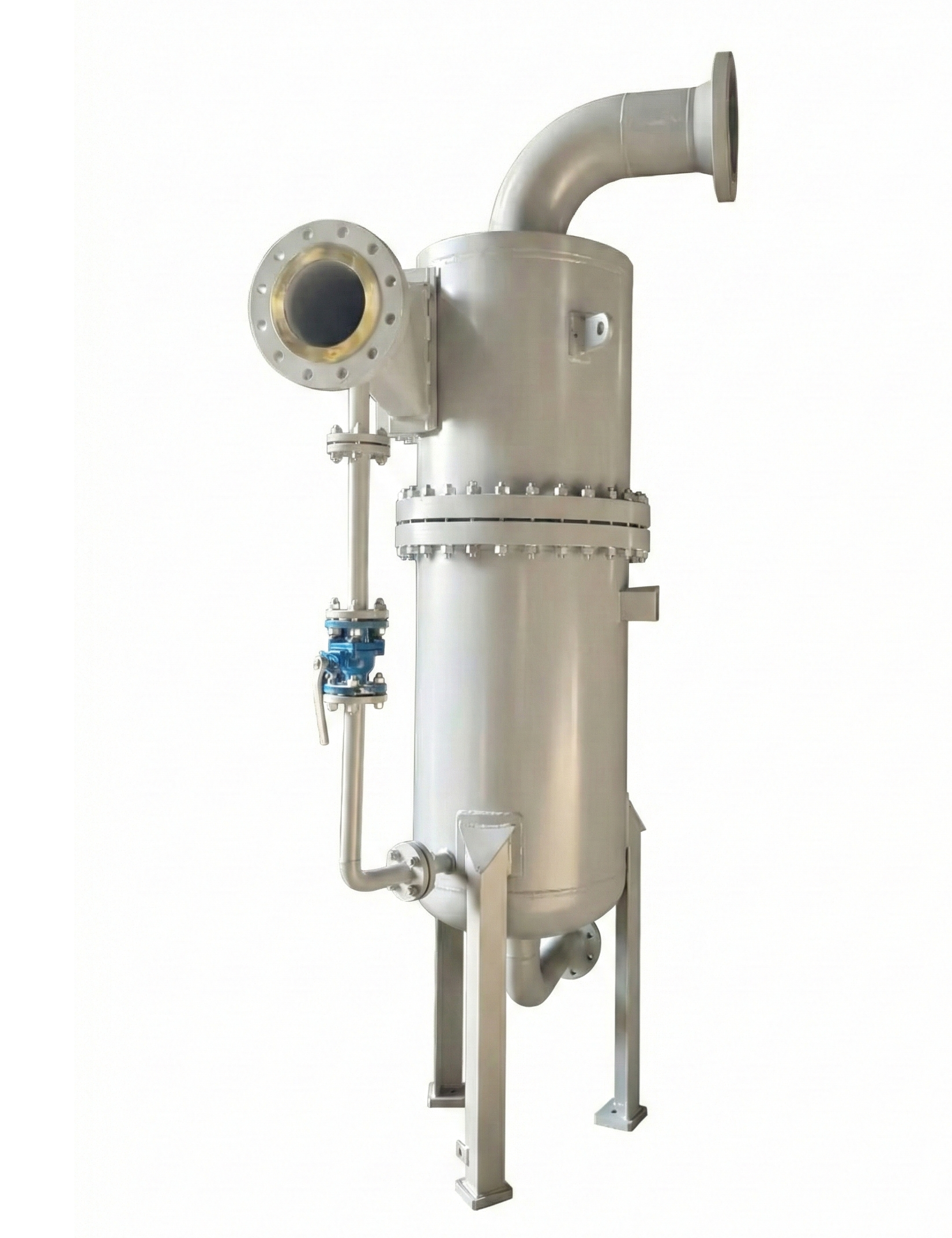
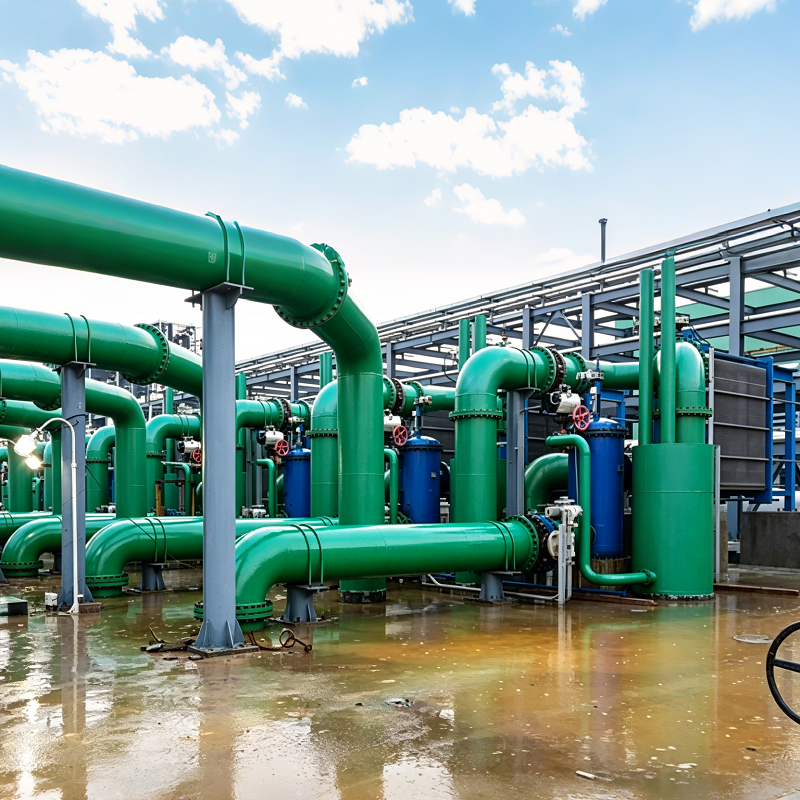
A hydrocyclone desander is employed as the first line of defense, using centrifugal force to rapidly separate coarse sand particles. A self-cleaning screen filter is installed downstream to capture remaining suspended solids, ensuring stable effluent turbidity and protecting all downstream water-using equipment.
Product:
Liquid-Solid Hydrocyclone
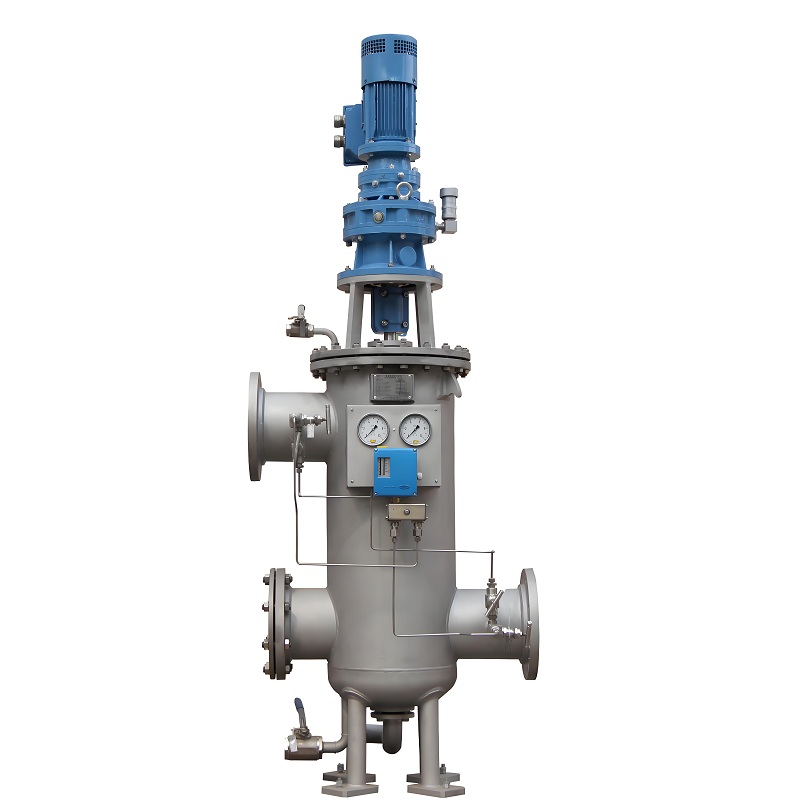
Automatic Self-Cleaning Filter
Circulating Cooling Water System – Filtration
Process:
Circulating cooling water is continuously reused in closed-loop piping. Sand from make-up water, airborne dust, and internally generated rust and biological slime accumulate over time. This stage employs both online and side-stream filtration to continuously reduce suspended solids concentration.
Problem:
Suspended solids deposit on heat exchanger tube surfaces, forming fouling resistance that reduces heat transfer efficiency and increases energy consumption. Severe cases cause clogging of plate heat exchanger channels, forcing frequent shutdowns for cleaning and disrupting production continuity.
Solution:
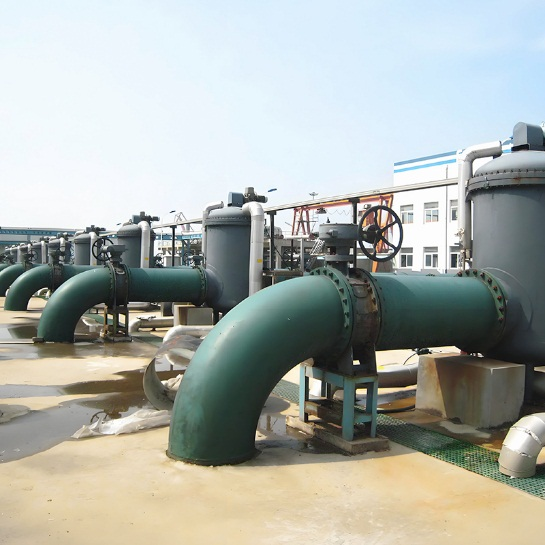
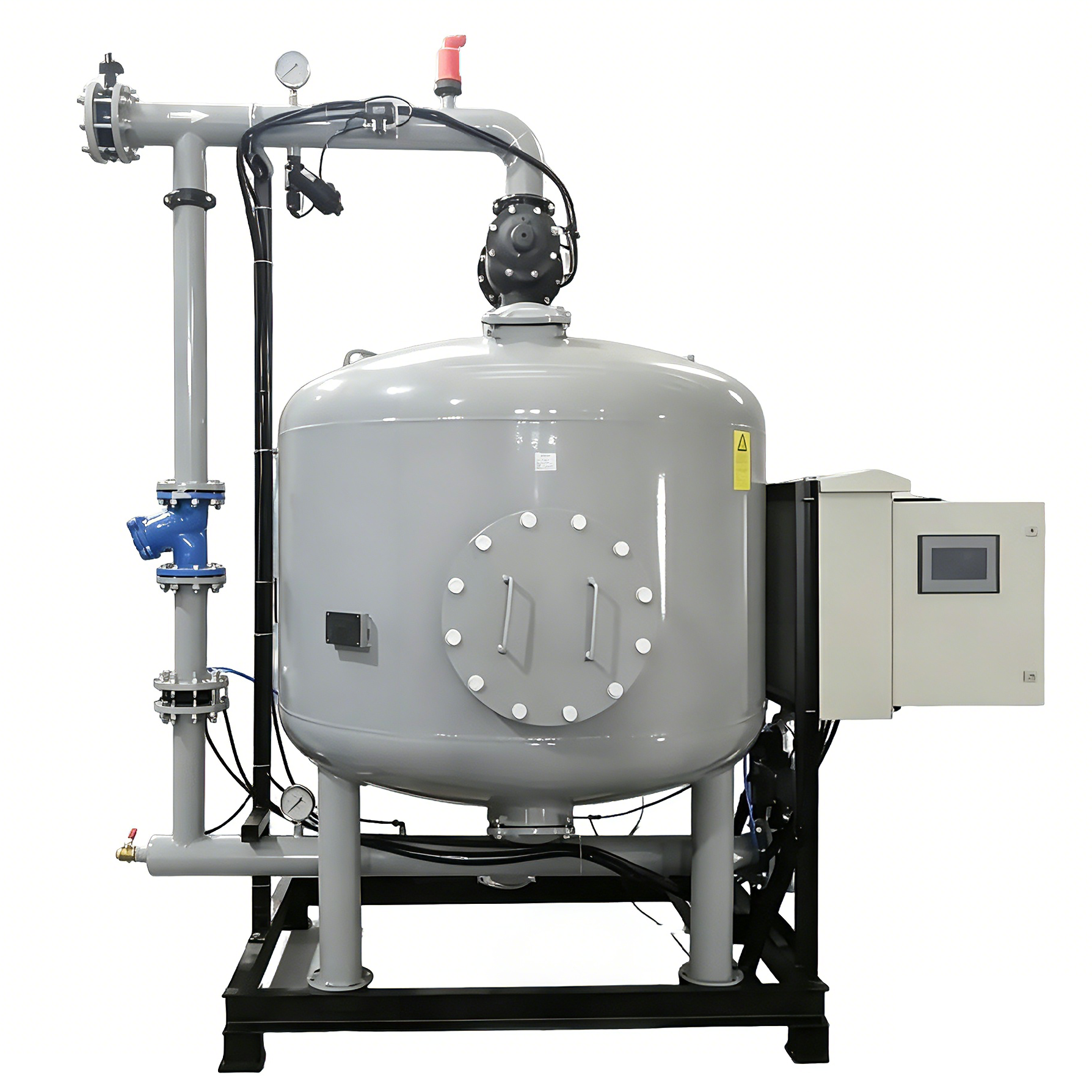
A fully automatic self-cleaning filter is installed at the circulating pump outlet for real-time removal of coarse particles. Simultaneously, 5%–10% of the return main flow is diverted to a side-stream filtration system (quartz sand) for deep turbidity reduction, substantially reducing blowdown and refill frequency.
Product:
Automatic Self-Cleaning Filter
Quartz Sand Filter
Reclaimed Water Reuse System – Cartridge Filtration Ahead of Membrane System
Process:
Reclaimed water (secondary biological effluent) still contains residual suspended solids, colloids, and biological flocs after coagulation/sedimentation or flotation. This stage provides final protection ahead of UF or RO membrane systems.
Problem:
Reclaimed water quality fluctuates significantly. Activated carbon fines, coagulant residues, or biological debris may leak from upstream treatment — once these particles enter the membrane system, they score the membrane surface and block membrane pores, causing a sharp decline in flux. Membrane replacement is costly.
Solution:
A high-precision fully automatic self-cleaning filter effectively captures all solid particles larger than the rated micron size, ensuring safe membrane feed and extending membrane service life.
Product:
Automatic Self-Cleaning Filter
Desalination/ Demineralized Water System – Full Filtration Chain
Process:
Desalination/Demineralized water systems require multiple filtration stages from raw water to final pure water — pretreatment, membrane protection, final polishing, and cleaning solution filtration. Each stage has a distinct role in ensuring product water resistivity and long-term membrane system performance.
Problem:
Suspended solids, residual chlorine, and organics in raw water damage RO membranes. Activated carbon fines or resin beads leaking from upstream score the membrane surface. Insoluble particles in cleaning solution cause secondary damage to membranes. Microorganisms may grow in the final piping, affecting water quality.
Solution:
A complete four-stage filtration chain is provided:
① Multi-media filter + activated carbon filter to remove silt, residual chlorine, and organics;
② Cartridge filter ahead of RO to capture fine particles;
③ Final polishing filter at the permeate end to remove microorganisms from piping;
④ An independent cartridge filter on the cleaning solution circuit to ensure cleaning does not harm membrane elements.
Product:
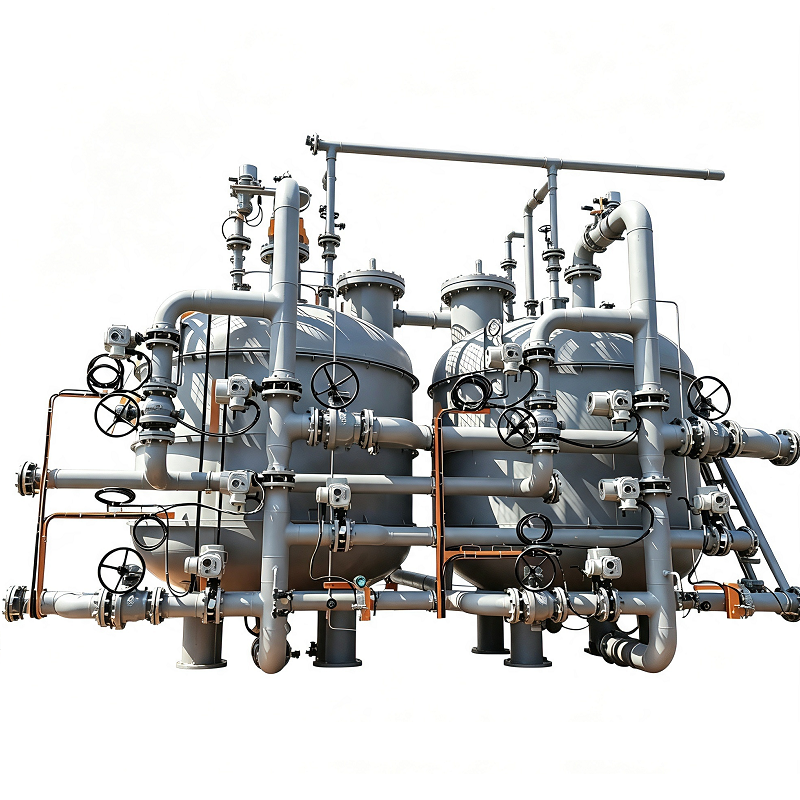
Multi-Media Filter
Automatic Self-Cleaning Filter
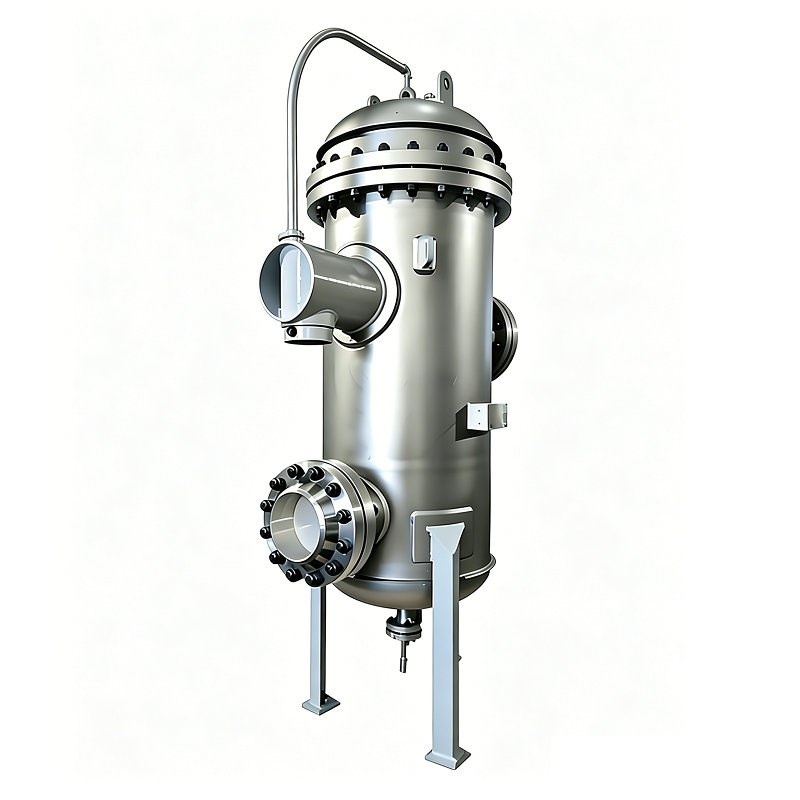
Cartridge Filter
Seawater Electro-chlorination System Pre-Filtration
Process:
Coastal plants electrolyze seawater to produce sodium hypochlorite, injected into circulating water lines to control biofouling.
Problem:
Suspended solids and sand coat electrolyzer electrodes, reducing efficiency, increasing power consumption, and potentially burning out electrodes. Frequent cleaning disrupts operation.
Solution:
Install a hydrocyclone upstream of the electrolyzer feed for sand removal, followed by a self-cleaning filter to trap suspended solids, keeping electrode surfaces clean.
Products:
| Liquid-Solid Hydrocyclone | Automatic Self-Cleaning Filter |
|
|