EN
EN



Chemical
Fully Automatic Candle Filter – Full-Process Filtration Solutions for Chemical Industries
Titanium dioxide, fiber (viscose/chemical fiber), fine chemical, and sugar industries commonly face harsh conditions such as high temperature/pressure, strong acids/alkalis, organic solvents, and hazardous media. Demands for filtration precision, material recovery, environmental compliance, and continuous automated operation are increasingly stringent. The efficiency and reliability of solid-liquid separation directly impact product quality, production costs, and environmental compliance.
CREST has specialized in precision filtration for years. Our fully automatic candle filter integrates filtration, washing, drying, and discharge into one unit. With advantages including multi-functionality, fully enclosed operation, high precision, and low maintenance, it provides full-process filtration solutions – from coarse impurity removal to fine particle recovery, and from high-temperature condensate purification to catalyst recycling. The following sections detail applications by industry and process stage.
Titanium Dioxide Industry
Ⅰ.Hot Filtration of Acid Digestion Slurry
Process Description:
After ilmenite is digested with sulfuric acid, the resulting Black Titanium Liquid (a concentrated titanium oxysulfate solution) contains undecomposed ore particles, silicates, and insoluble residues. This stage performs hot filtration after digestion and settling.
Problem:
Residual particles after settling severely wear downstream filter cloths and centrifuge bowls, causing frequent maintenance and replacement. These residues also introduce impurities during hydrolysis, affecting TiO₂ crystal structure and whiteness.
Solution:
A fully automatic candle filter with acid-resistant and high-temperature-resistant media is used. Precoat filter aid forms a dynamic filtration layer for direct hot filtration. The filter cake is automatically back-pulse discharged, and clear filtrate proceeds downstream.
Product Application:
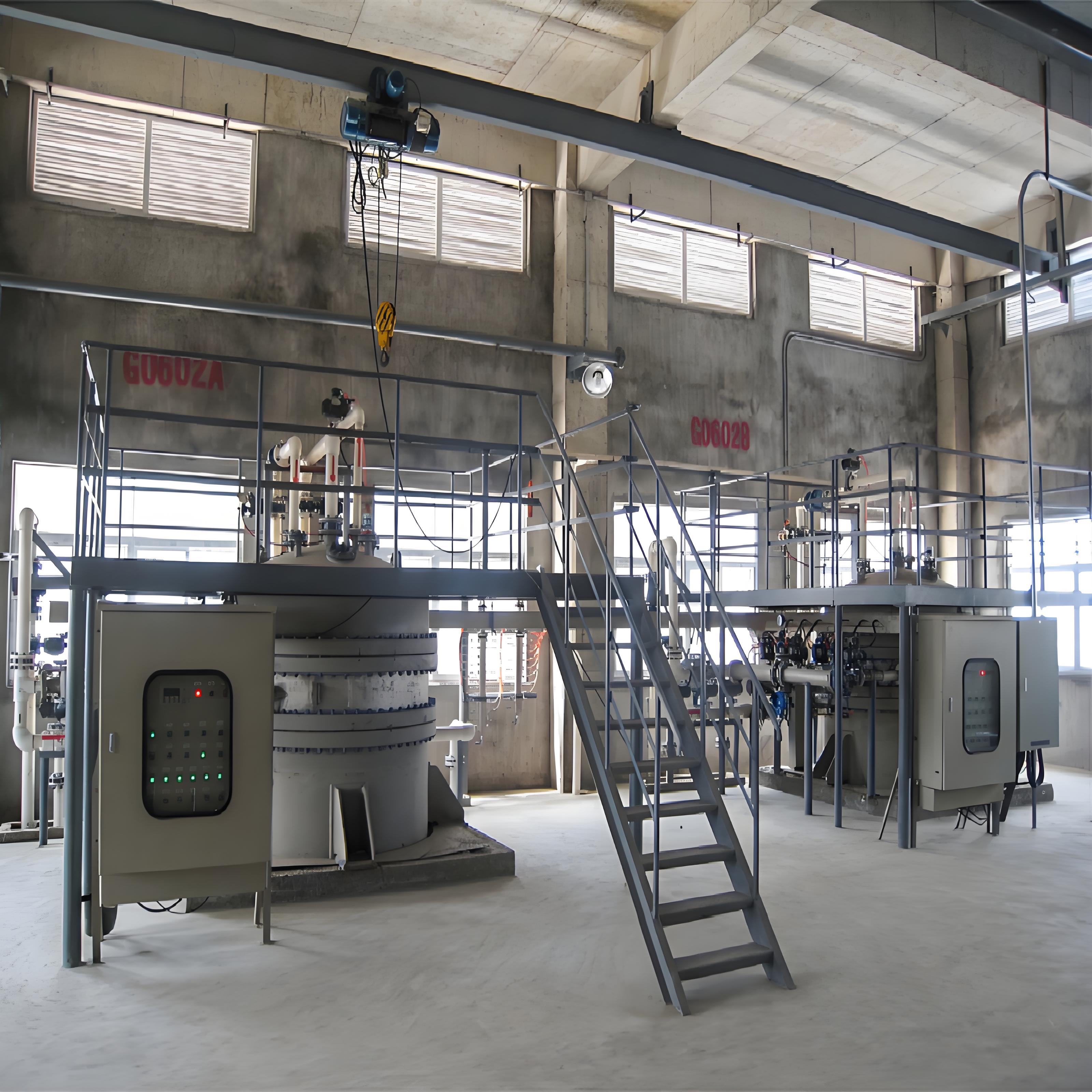
Acid-Resistant Candle Filter for TiO2 Production-FRPP filter elements
Ⅱ.Titanium Liquid Control Filtration after Ferrous Sulfate Crystallization
Process Description:
The digestion liquid is vacuum-cooled to crystallize ferrous sulfate (FeSO₄·7H₂O). After disc filtration or centrifugation removes most crystals, the titanium liquid proceeds to hydrolysis. This stage is positioned between crystallization separation and hydrolysis.
Problem:
The titanium liquid still contains fine ferrous sulfate crystals and suspended solids. If not removed, these impurities can form undesired crystal structures during hydrolysis, reducing TiO₂ purity and yield.
Solution:
A fully automatic candle filter with precoated filter aid performs precision control filtration, reducing filtrate solids to an extremely low level and ensuring high-purity titanium liquid for hydrolysis.
Product:
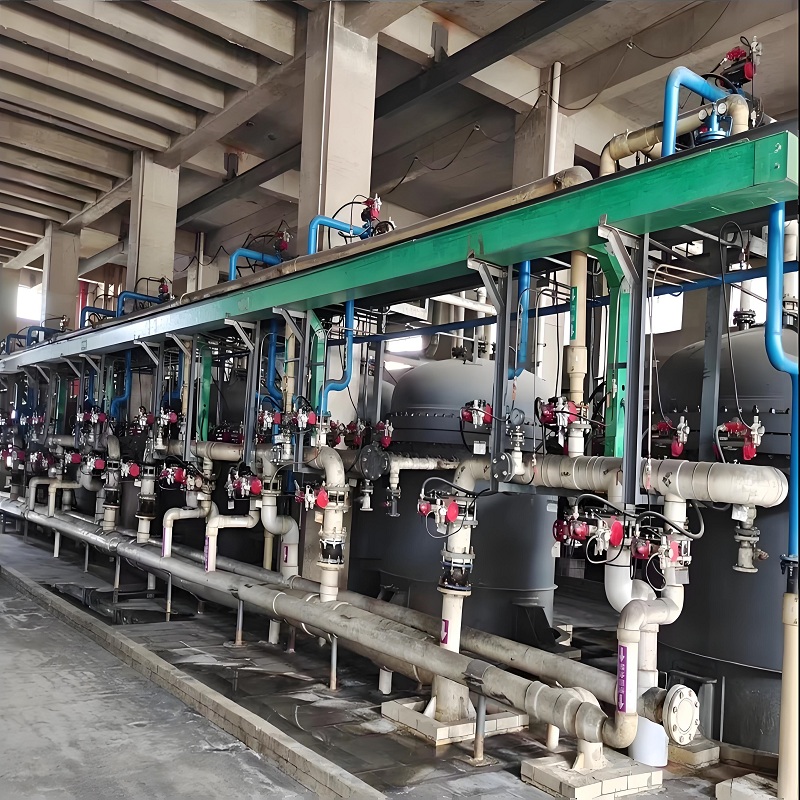
Acid-Resistant Candle Filter for TiO2 Production
Ⅲ.TiO₂ Crude Slurry Recovery (Sulfate & Chloride Process)
Process:
TiO₂ crude from sulfate hydrolysis or chloride oxidation undergoes slurrying, wet milling, surface treatment, and multiple water washes to remove soluble salts. The wash water contains fine TiO₂ particles. This stage recovers TiO₂ from the wash water.
Problem:
Direct discharge of TiO₂-laden wash water causes product loss and significantly increases wastewater treatment load and environmental costs.
Solution:
A high-precision fully automatic candle filter treats the wash water. Recovered TiO₂ cake returns to the main process, and clear filtrate is discharged or reused within compliance.
Product:
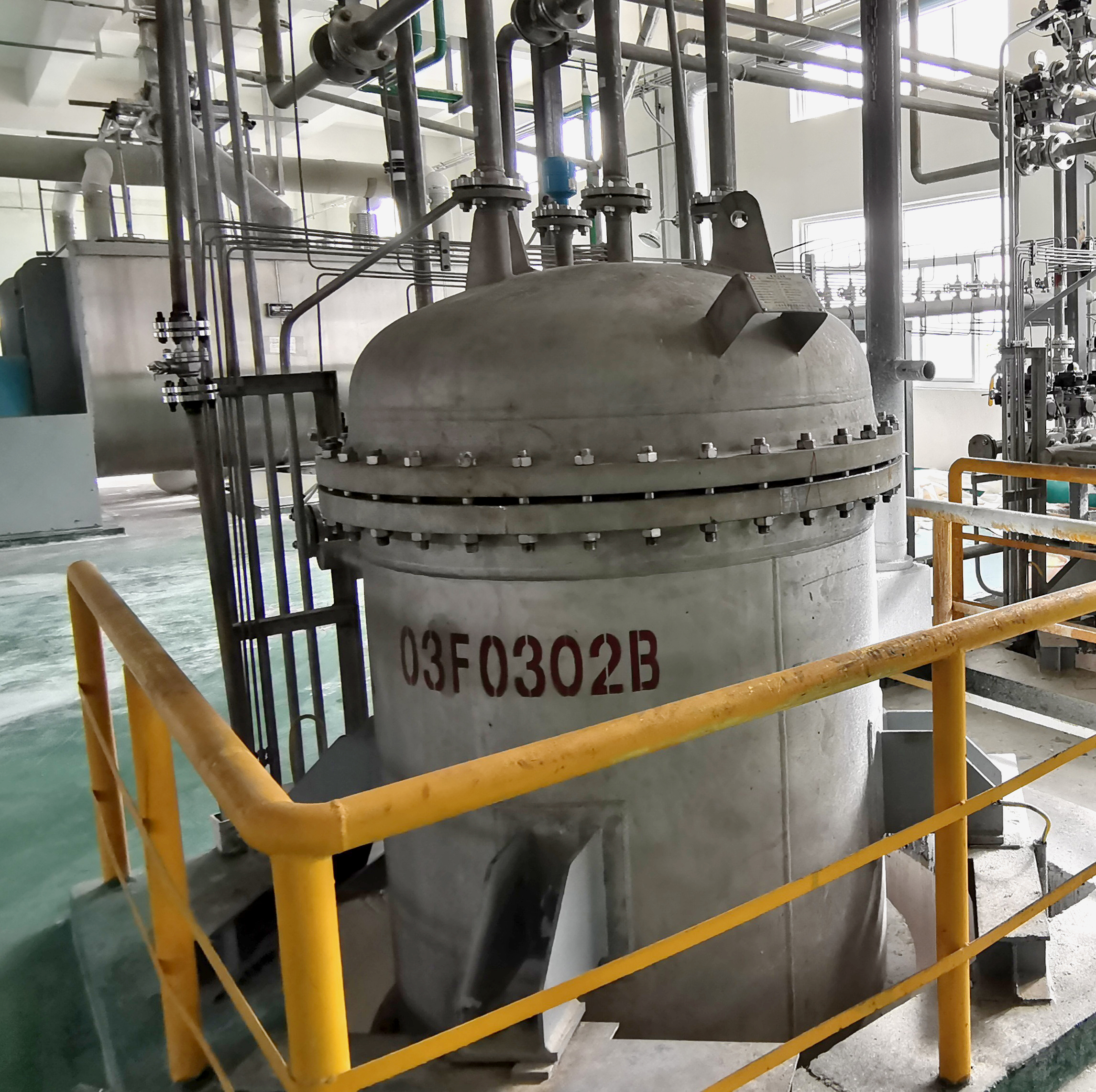
Automatic Candle Filter
Fiber Industry (Viscose Fiber)
Spinning Bath Circulation Filtration
Process:
In viscose spinning, the dope is extruded through spinnerets into a spinning bath of sulfuric acid, sodium sulfate, and zinc sulfate, where cellulose precipitates into fiber. The bath is circulated continuously and accumulates sulfides, fiber debris, and other suspended solids. This stage is a side-stream filtration loop for the spinning bath, covering fiber wash water and second bath water.
Problem:
Impurity buildup causes bath composition fluctuations, affecting fiber quality. Suspended solids clog spinnerets and pumps, increasing downtime for cleaning, while sulfuric acid consumption remains high.
Solution:
A side-stream fully automatic candle filter with precoat filter aid continuously removes suspended impurities. Clean bath liquid returns to the tank, and residue is automatically discharged, keeping the bath stable and clean.
Product:
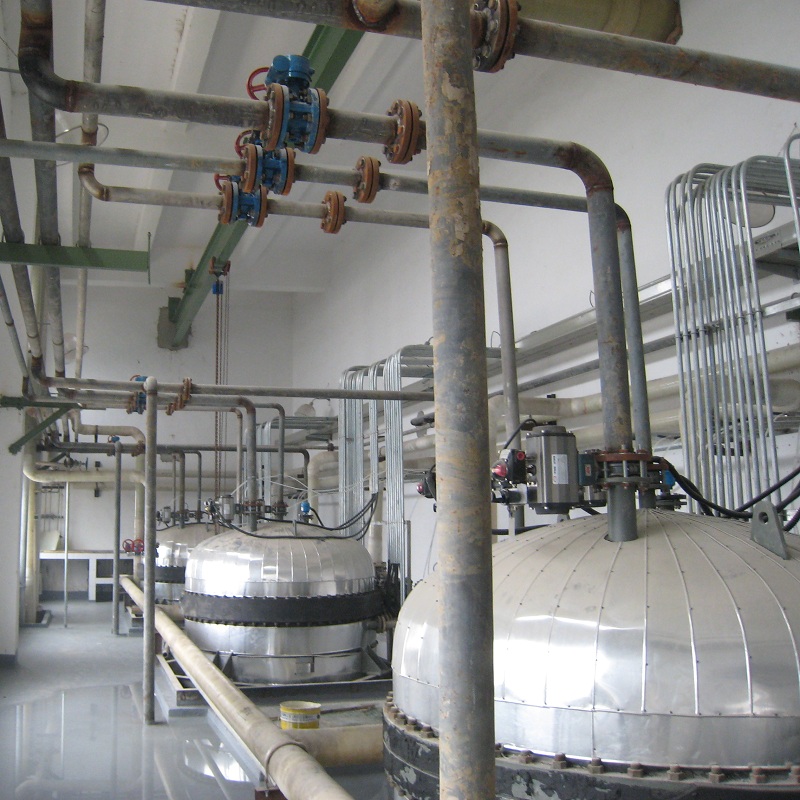
Automatic Candle Filter for Viscose Fiber Process Water (Flash Second Bath)-PVDF filter elements
Fiber Industry (Chemical Fiber/Acrylic)
Steam Condensate Precision Filtration
Process:
In polymerization plants, equipment such as kettles, dryers, and heat exchangers use steam as a heating medium. After heat release, steam condenses. During pipeline transport, the condensate picks up rust (Fe₂O₃/Fe₃O₄) from pipe corrosion and small amounts of suspended solids. This stage is positioned after the condensate tank outlet.
Problem:
Rust-containing condensate used directly in process washing (e.g., fiber tow washing) leaves stains on product surfaces. Discharging it wastes thermal energy (80–100°C) and increases demineralized water makeup and energy consumption.
Solution:
A fully automatic candle filter with cellulose as filter aid performs precision iron removal. Clean condensate is reused for process washing or cooling tower makeup. Rust residue is automatically back-pulse discharged.
Product:
Automatic Condensate Recovery Candle Filter for Acrylic Fiber
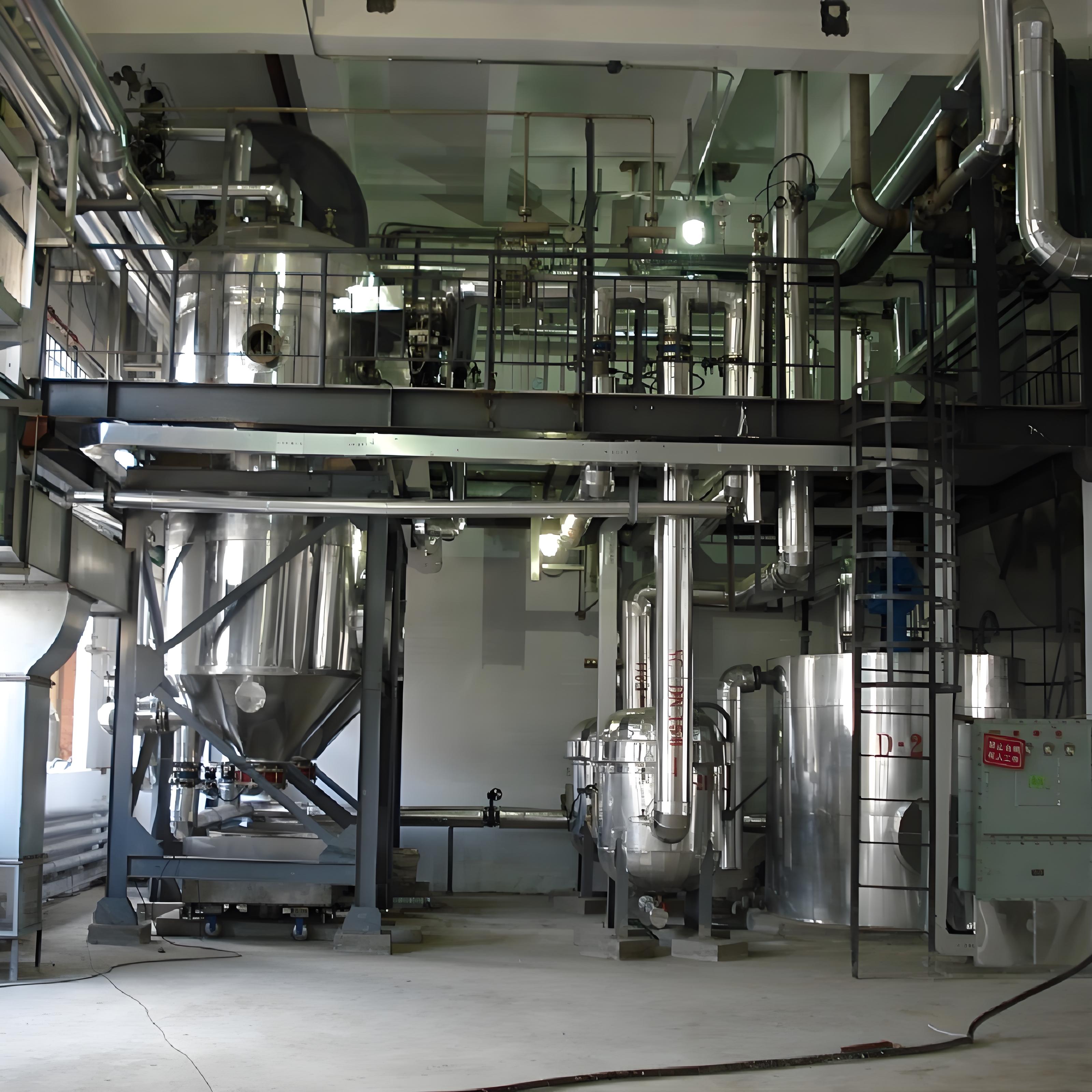
Fine Chemical Industry
Hydrogenation Catalyst Recovery
Process:
Hydrogenation reactions (e.g., oil hydrogenation, pharmaceutical intermediate synthesis) use precious metal catalysts such as Raney nickel or palladium on carbon. After reaction, the catalyst remains suspended in the liquid. This stage separates catalyst from product after the reactor.
Problem:
Catalysts containing palladium, platinum, and other precious metals are expensive, making single-use cost-prohibitive. Spent catalysts in wet state pose a spontaneous combustion risk during handling.
Solution:
A fully automatic candle filter operates under nitrogen purge for closed filtration. Filtrate goes to product collection, and catalyst cake is discharged dry, ready for regeneration.
Product:
Automatic Candle Filter
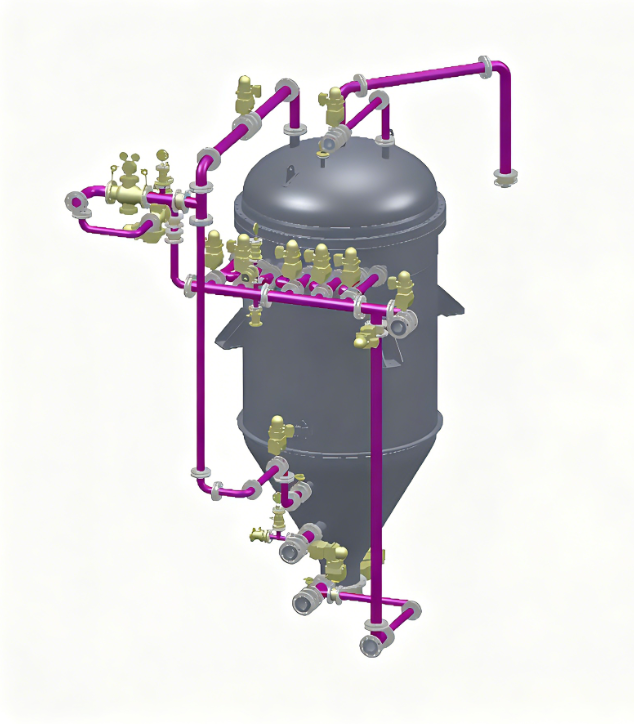
Spent Carbon Removal after Activated Carbon Decolorization
Process:
Pharmaceutical intermediates, food additives, fine chemicals, and other products are often decolorized with activated carbon. After mixing to adsorb pigments, the spent carbon powder must be separated from the liquid. This stage is positioned after the decolorization tank and before crystallization/drying.
Problem:
Activated carbon powder is extremely difficult to settle. Residual carbon affects product appearance and purity. Spent activated carbon is hazardous waste; discharging it wet results in large volume and high disposal costs.
Solution:
A fully automatic candle filter with pre-circulation to establish a filter bed delivers continuous clear filtrate. Spent carbon is automatically discharged as dry cake, ready for incineration, regeneration, or off-site disposal.
Product:
Automatic Candle Filter