EN
EN


Oil & Gas
In offshore oil and gas field development — whether on fixed jacket platforms or Floating Production Storage and Offloading (FPSO) units — space constraints, stringent safety requirements, and prolonged continuous operation are the core challenges for any equipment. CREST’s filtration and hydrocyclone systems cover the entire lifecycle from production to treatment and reinjection: from wellhead desanding to produced water purification, from TEG purification to make-up well water treatment and seawater utility filtration. With compact design, motion-tolerant performance, and low maintenance costs, CREST delivers reliable solutions for fixed platforms and FPSOs worldwide.
A typical offshore oil & gas production and processing flow is illustrated below:
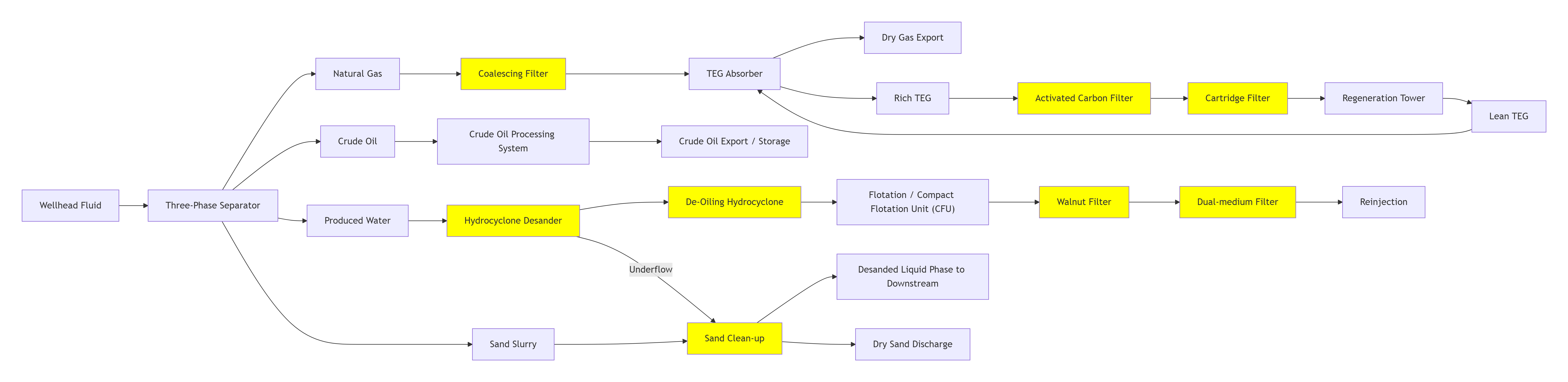
Note: Yellow-highlighted nodes represent CREST’s core equipment applications.
Desanding & Sand Cleaning
Process:
Formation sand from unconsolidated sandstone reservoirs travels with well-stream fluids at velocities of several meters per second, eroding downstream valves, pumps, and pipe elbows. The desanding system is installed after the 3-phase separator to efficiently separate sand from the sand-laden bottom stream and wash off entrained oil, protecting downstream equipment.
Challenges:
Sand erosion is a persistent issue in offshore production. Replacement of a sand-damaged multiphase pump on an FPSO can cost millions of dollars, with weeks of production downtime. Sand accumulation also reduces separator effective volume, creating a vicious cycle.
Solution:
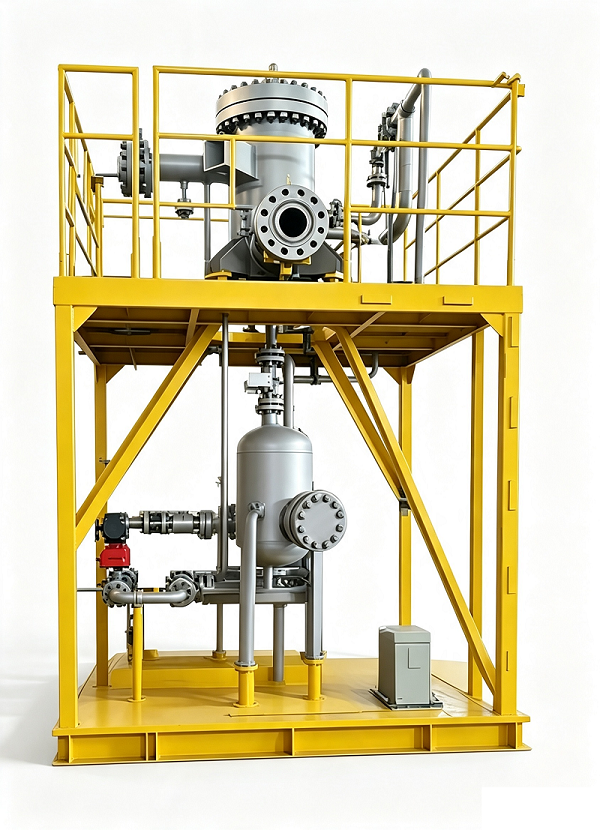
Hydrocyclone desanders achieve rapid solid-liquid separation. The concentrated sand stream then passes through a sand cleaning hydrocyclone, meeting environmental discharge requirements.
Products:
Automatic Tank Bottom Desanding Device
liquid-Solid Hydrocyclone
Produced Water Treatment
Process:
Produced water from the 3-phase separator contains significant oil and suspended solids, requiring multi-stage treatment before overboard discharge or reservoir reinjection. Offshore platforms face strict oil-in-water limits for discharge, while reinjection demands tight control of oil content and suspended solids.
Challenges:
Exceeding discharge limits invites heavy fines or even suspension of operating permits. For reinjection, solids plug reservoir pore throats, causing injection pressure to rise sharply and injection rates to decline. The continuous motion of offshore platforms significantly reduces the efficiency of conventional gravity settling.
Solution:
Adopting a cascaded treatment process, The oily produced water from the three-phase separator first passes through a hydrocyclone desander to remove formation sand and protect downstream equipment; it then enters a deoiling hydrocyclone, where centrifugal force removes most of the free oil; subsequently, it is treated in a flotation / Compact Flotation Unit (CFU) to remove emulsified oil and fine suspended solids; finally, a three-stage fine filtration consisting of a Walnut Filter, a Dual-medium Filter, and an Injection Filter ensures that the effluent meets the requirements for sea discharge or reinjection.
Products:
| liquid-Solid Hydrocyclone | Deoiling Hydrocyclone |
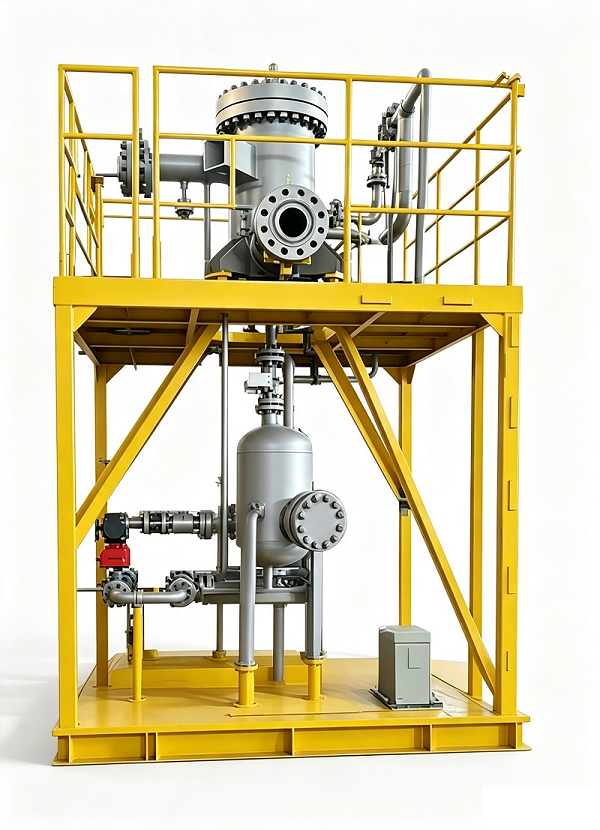 |
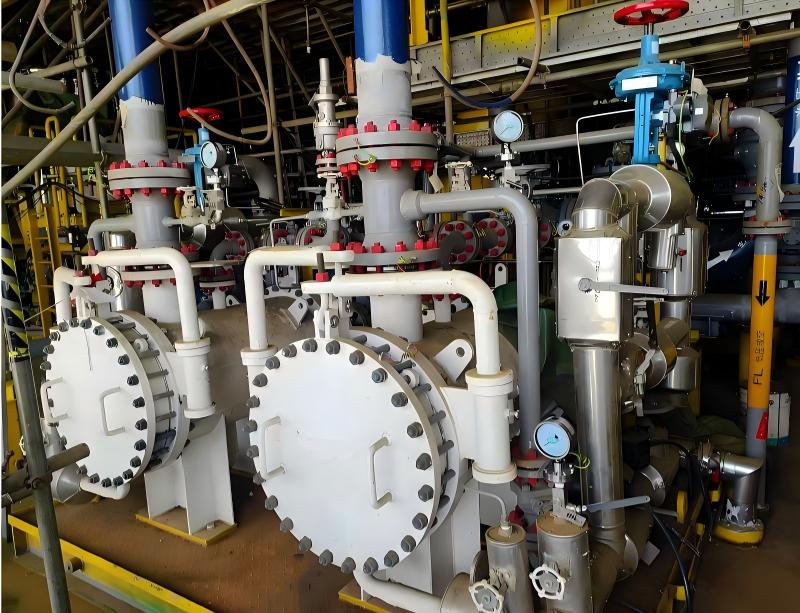 |
Walnut Filter
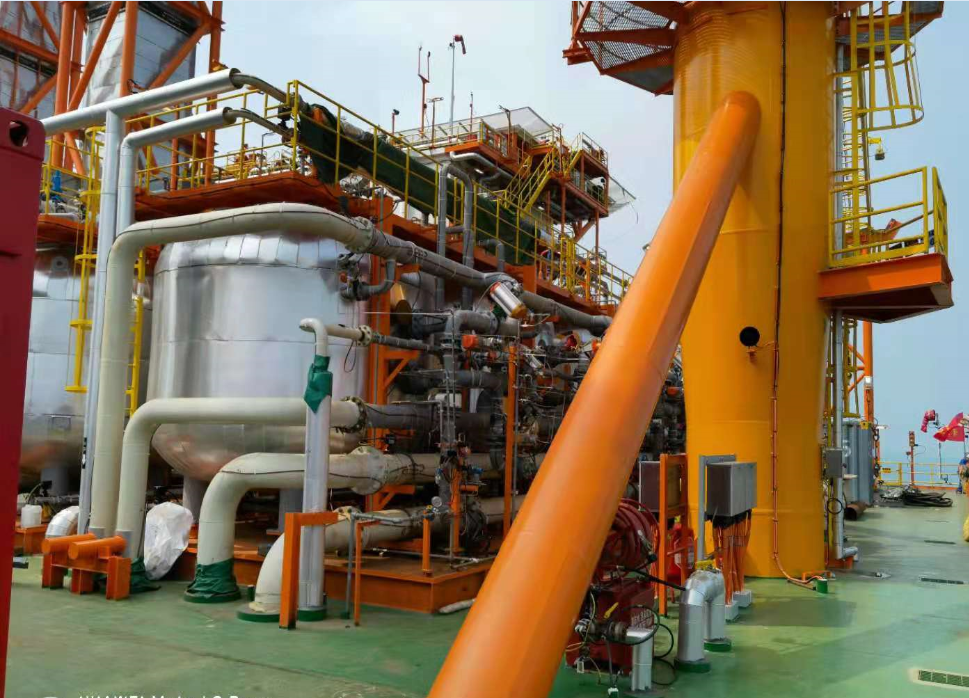
Dual-Medium Filter
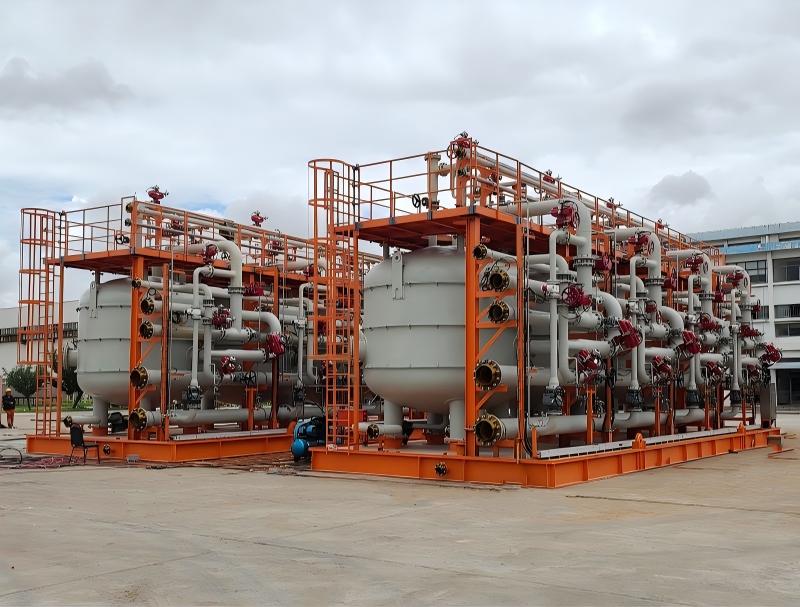
TEG Purification (Natural Gas Dehydration)
Process:
Wet natural gas produced offshore contains significant water vapor, which can cause pipeline corrosion and hydrate blockage if directly exported. Triethylene glycol (TEG) dehydration is the industry's most widely adopted process. Wet gas first passes through a coalescing filter to remove free liquids and solids, then enters the TEG contactor for countercurrent contact with lean TEG, achieving deep dehydration. The water-rich TEG is regenerated via the regeneration loop and recycled.
Challenges:
Condensate, compressor lube oil, solids carried in the feed gas, and TEG degradation products from prolonged high-temperature operation cause foaming, reduced dehydration efficiency, and unacceptable dry gas dew points. Reboiler tube fouling requires frequent shutdowns for cleaning, and TEG losses are costly.
Solution:
A coalescing filter at the inlet intercepts free liquids and solids, preventing TEG foaming at the source. Rich TEG passes through a three-stage purification train (Mechanical Filter → Activated Carbon Filter → After-Filter) before regeneration. Lean TEG is polished through a final filter to ensure clean recycle. The integrated solution addresses foaming, fouling, and corrosion challenges.
Products:
Coalescing Filter.
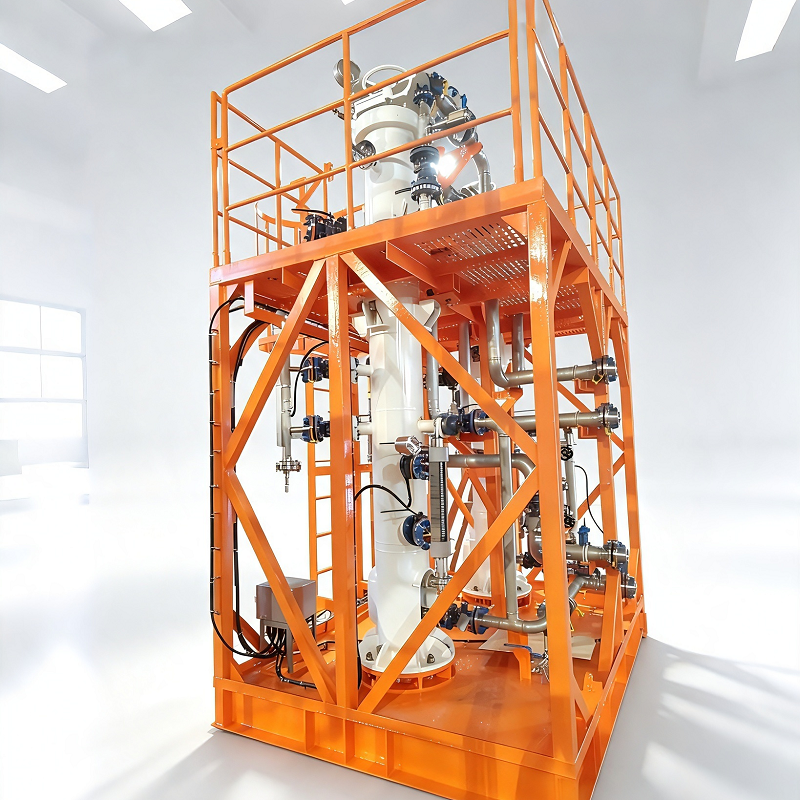
Activated Carbon Filter
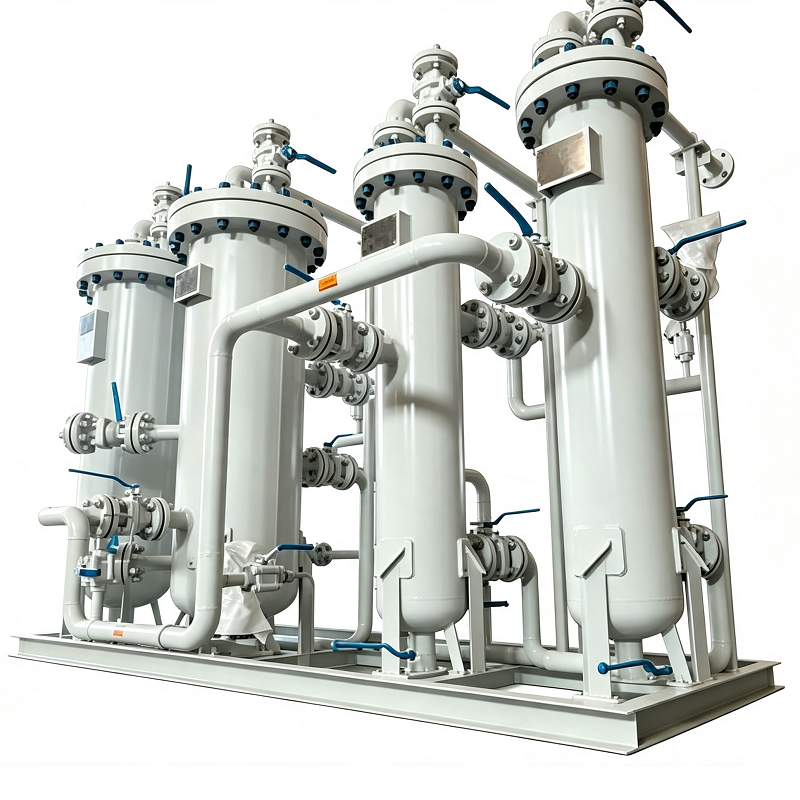
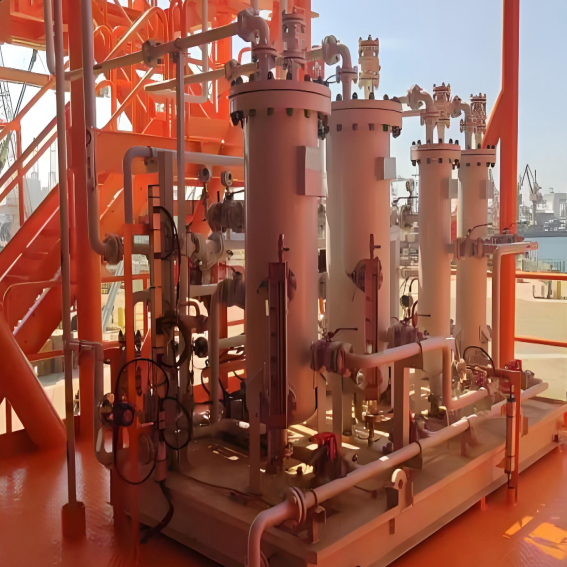
Cartridge Filter.
Make-up Well Water Treatment
Process:
To maintain reservoir pressure and enhance oil recovery, groundwater (or treated produced water) is lifted, filtered, and injected into the reservoir via high-pressure injection pumps. Low-permeability reservoirs impose particularly stringent water quality requirements.
Challenges:
Suspended solids and particulates in make-up water, if not effectively removed, plug reservoir pore throats — causing injection pressure to rise, injection rates to decline, and in severe cases, well abandonment. Remediation costs are extremely high.
Solution:
After lifting, well water first passes through a desanding hydrocyclone to remove large sand particles, followed by a fiber ball filter for fine filtration — maximizing reservoir protection.
Products:
liquid-Solid Hydrocyclone
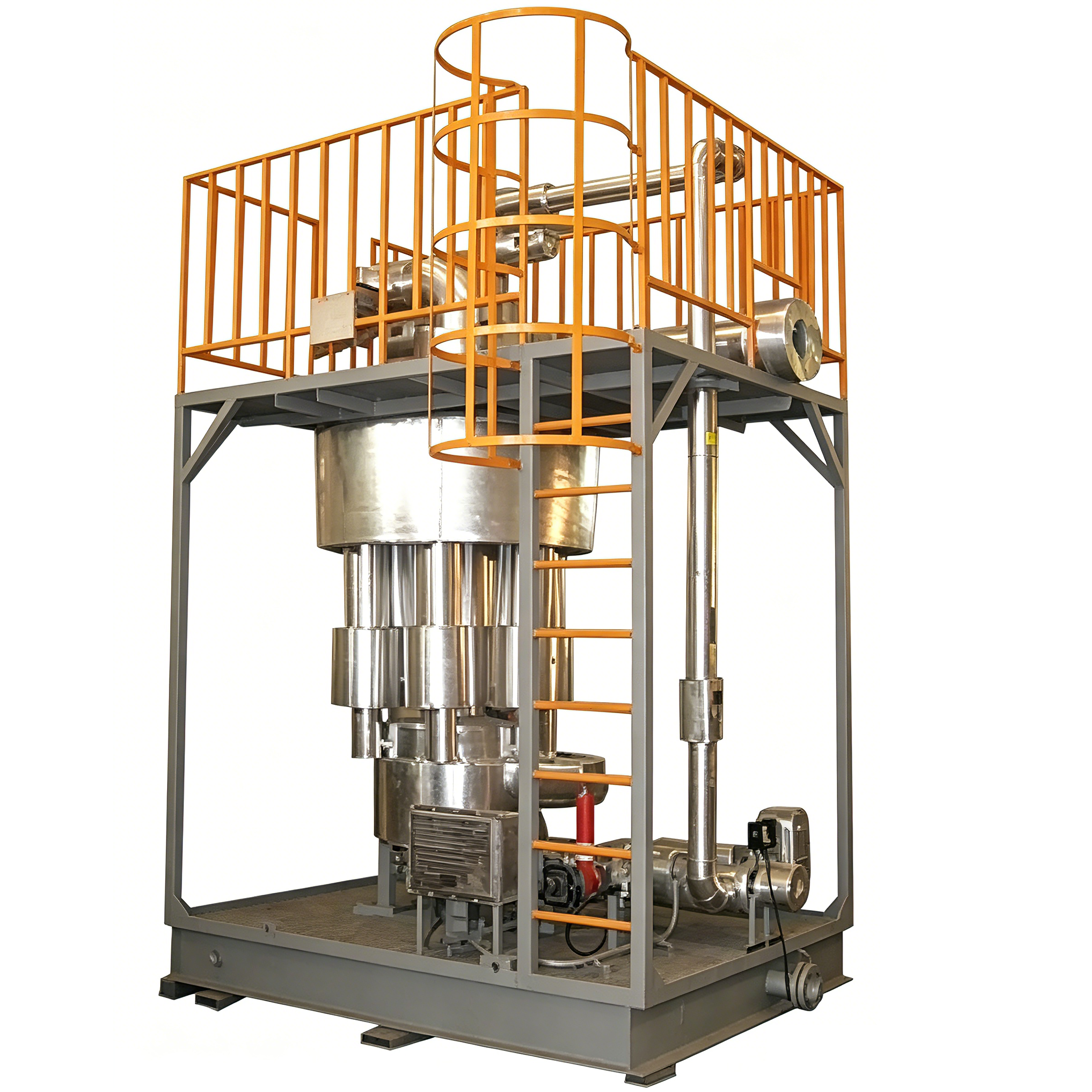
Fiber Ball Filter
Seawater Utility System
Process:
Seawater lift pumps draw seawater, which is then filtered through automatic backwash filters and distributed to various users: process cooling heat exchangers, electrolytic seawater chlorination units, and deck firewater systems. Filtration precision is configured per specific user requirements.
Challenges:
Seawater contains large quantities of marine organisms (jellyfish, algae, shell fragments) and suspended solids. Without effective interception, these will foul heat exchanger tubes, reducing cooling efficiency; erode expensive chlorination cell electrodes; and clog fire sprinkler nozzles, compromising emergency firewater availability.
Solution:
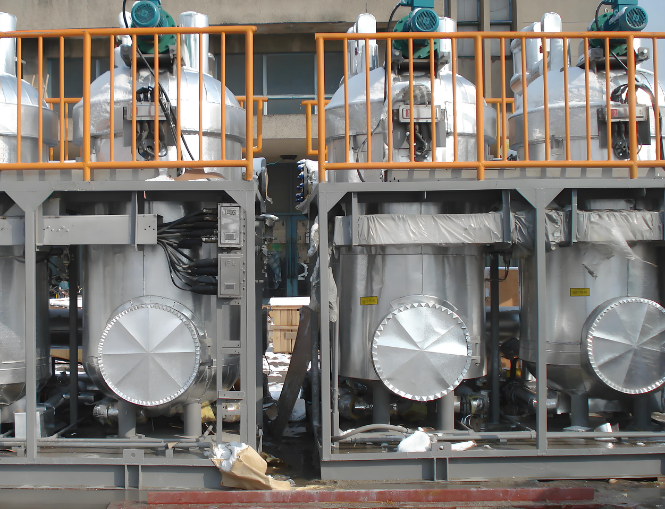
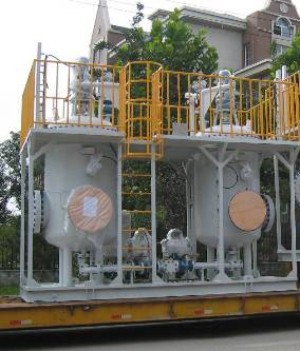
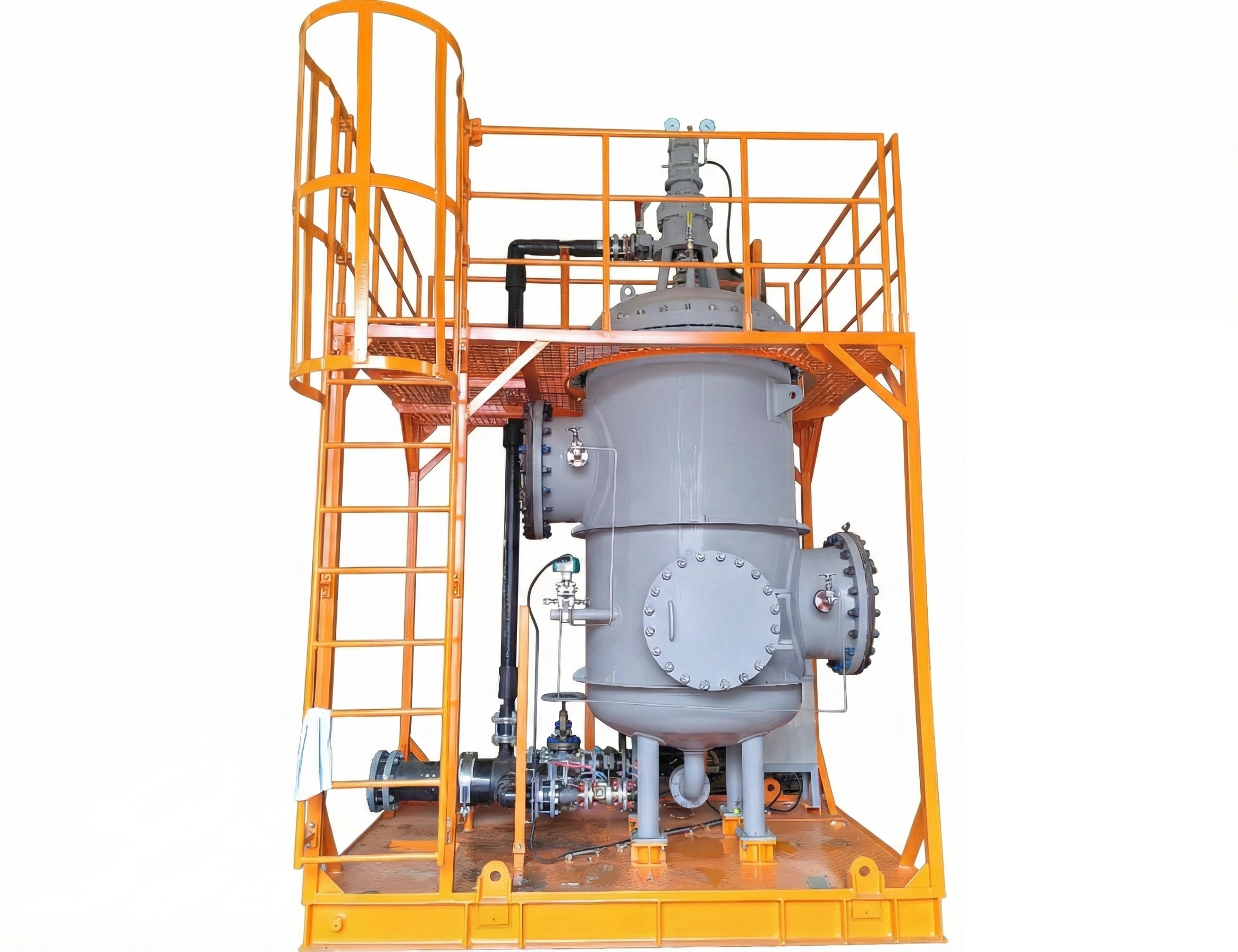
Automatic backwash seawater filters are installed downstream of seawater lift pumps. Fabricated from super duplex stainless steel to withstand high Cl⁻ corrosion. Multiple filter elements in parallel enable online backwashing, fully automatic based on differential pressure or timer.
Products:
Automatic Backwash Seawater Filter
Chemical Injection System
Process:
Offshore production requires precise injection of chemicals — corrosion inhibitors, scale inhibitors, demulsifiers, biocides, and hydrate inhibitors — at multiple points throughout the process, ensuring flow assurance, corrosion/scale control, and process stability.
Challenges:
Corrosion, scaling, hydrate formation, and emulsion breaking are common offshore production issues requiring multi-point precision dosing. Systems must operate reliably under platform motion, tight space, and stringent explosion-proof conditions.
Solution:
Supply complete chemical injection packages — covering chemical storage, precision metering, and distribution — in modular skid-mounted designs. Factory pre-commissioned, ready for plug-and-play upon delivery. Integrated components include storage tanks, metering pump sets, instruments/valves, control panels, and piping.
Products:
Chemical Injection Skid