EN
EN



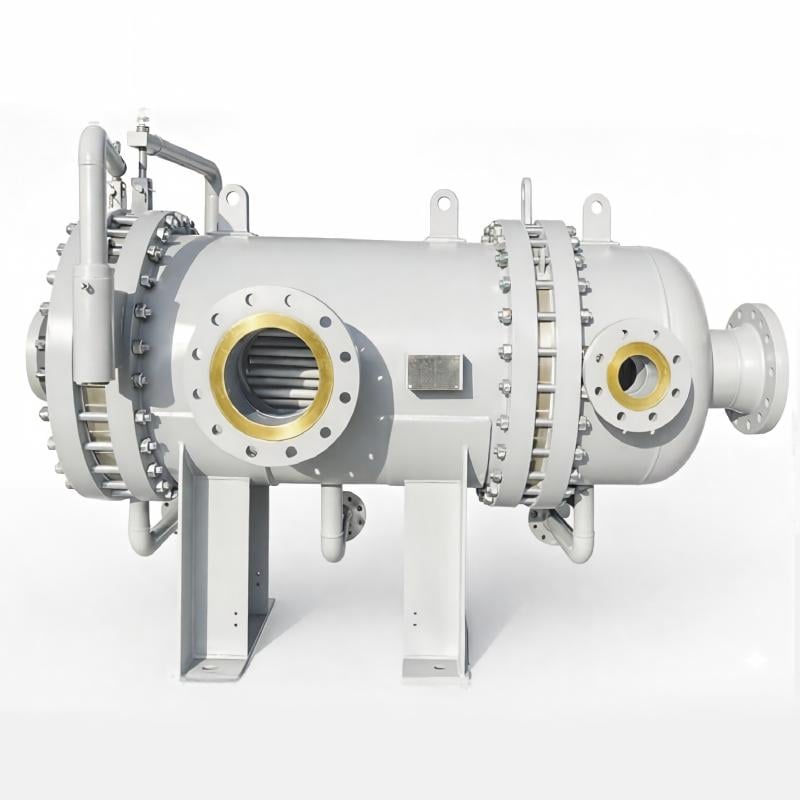
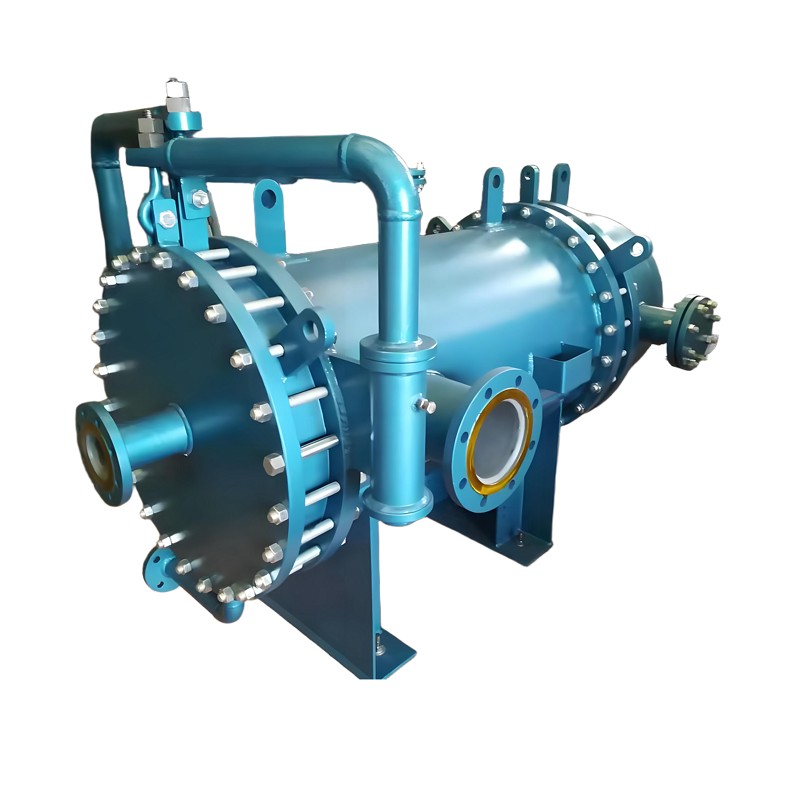
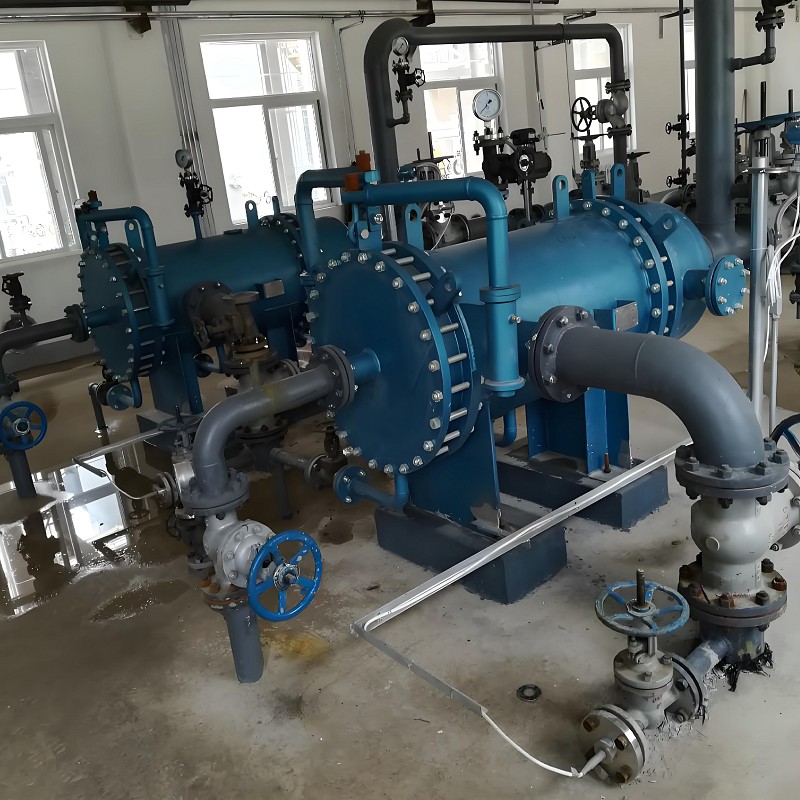
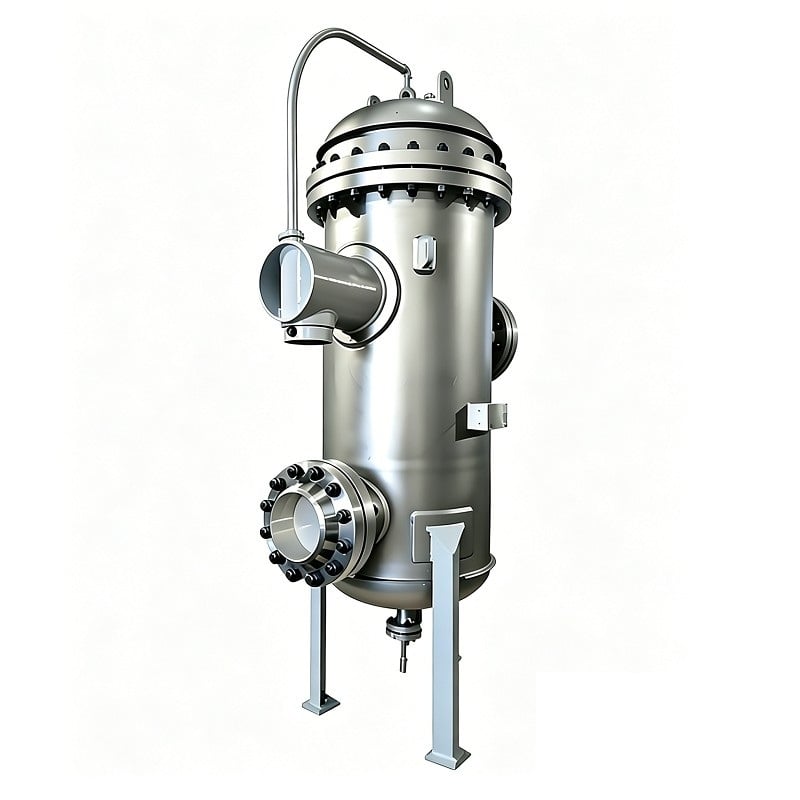
SXF-W Deoiling Hydrocyclone
In oil-water separation processes, traditional gravity settling equipment requires a large footprint and long residence times. Centrifuges have high energy consumption and maintenance costs, while filters require frequent maintenance that disrupts continuous production.

- Overview
- Recommended Products
Product Introduction
In oil-water separation processes, traditional gravity settling equipment requires a large footprint and long residence times. Centrifuges have high energy consumption and maintenance costs, while filters require frequent maintenance that disrupts continuous production.
he deoiling hydrocyclone, through its tangential swirl structure, converts pressure energy into a high-intensity centrifugal force field, enabling millisecond-level efficient separation and fundamentally enhancing separation efficiency and response speed.
As a key unit for process intensification and plant compactness, this equipment achieves high efficiency, low energy consumption, and low-maintenance continuous operation with its compact structure, providing a reliable separation solution for modern industries.
Key Advantages & Features
• High Separation Precision, Adaptable to Fluctuating Conditions
Optimized hydrocyclone liner and flow path design ensure stable separation performance within flow and pressure fluctuations. A single unit achieves Oil Content in Water Outlet ≤ 100 ppm, meeting stringent requirements.
• Compact Structure, Flexible Installation
Compact design with a small footprint allows flexible layout per site conditions. Suitable for both new projects and retrofits, with no major civil work required.
• Static Separation, Maintenance-free
No moving parts or consumables in the core separation unit. With no abnormal corrosion or wear, the equipment offers a long service life, significantly reducing operating costs.
• High-pressure Tolerance, Zero-energy Operation
Integral metal pressure-bearing structure designed to withstand high pressure, suitable for deep-sea and high-pressure oil & gas fields. Separation is driven solely by inlet pressure, requiring no additional power.
Working Principle
The hydrocyclone system consists of multiple hydrocyclone liners arranged in parallel within a common vessel. This multi-liner configuration is necessary because each individual liner has a fixed internal geometry optimized for separation performance and cannot be scaled to accommodate varying flow capacities. Operating multiple liners in parallel provides the required capacity while maintaining separation efficiency.
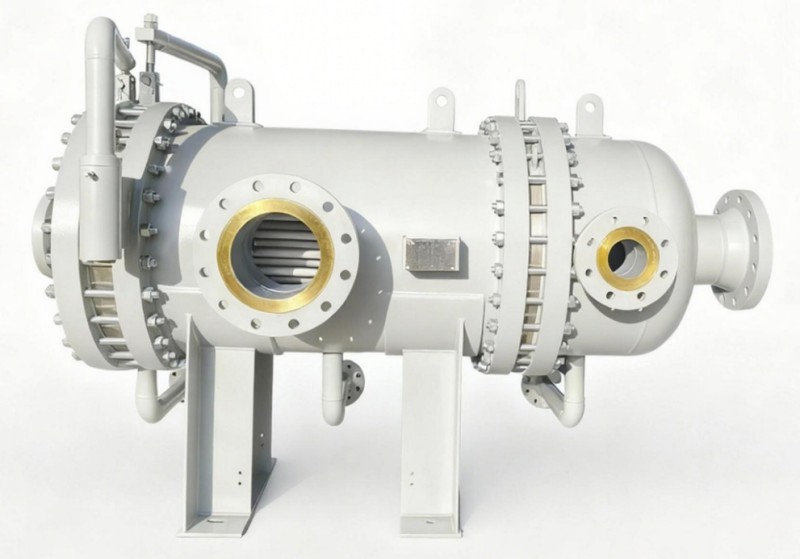
In a typical commercial system, the liners are manifolded inside a pressure vessel fitted with two internal support plates, dividing the vessel into three separate chambers: the feed (oily water) inlet chamber, the clean water outlet chamber, and the reject oil collection chamber.
The core of the deoiling hydrocyclone is its internally integrated multiple hydrocyclone liners, which are designed through computational fluid dynamics (CFD) optimization to achieve maximum separation efficiency. Each liner is a static device with no moving parts, ensuring high reliability and low maintenance.
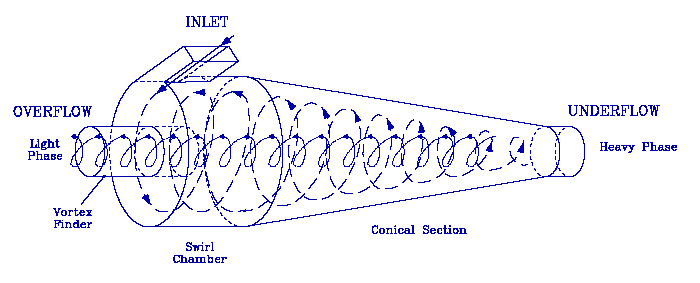
Separation is driven by high-intensity centrifugal forces generated within each liner. The oily wastewater enters the feed chamber and flows tangentially into each hydrocyclone liner under pressure. The tangential entry induces a high-velocity spinning motion inside the liner, creating a centrifugal force hundreds of times stronger than gravity. This forces the heavier water phase outward to the liner wall, while the lighter oil phase migrates toward the central axis. The water is then accelerated through the conical section and exits from the underflow (apex) of each liner, collecting in the clean water chamber for discharge through the water outlet. The separated oil, forming a slender oil core along the axis, is discharged from the overflow (reject) end into the oil collection chamber and removed through the oil reject outlet.
Core Component
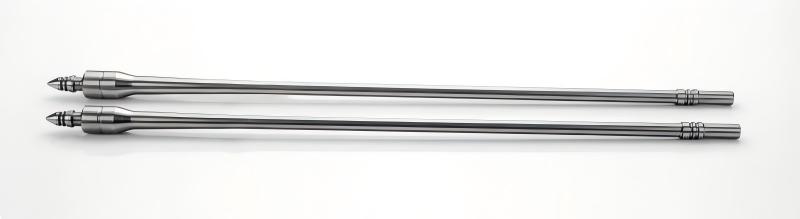
Hydrocyclone Liners
Technical Specifications
Parameter |
Specification |
Applicable Medium |
Oily Wastewater① |
Capacity per Unit |
0~550 m3/h |
Inlet Oil Concentration |
≤2000 ppm |
Water Outlet Oil Concentration |
≤100 ppm |
Suspended Oil Droplet Separation Size |
≥10 μm |
Operating Pressure |
≥0.56 MPa(G) |
Operating Temperature |
0~99 ℃ |
Design Pressure |
1.6 MPa(G), or Specified |
Design Temperature |
<100 ℃ |
Overflow Ratio |
≤3% |
Differential Pressure Ratio |
1.75~2 |
Vessel Material |
Carbon Steel, SS304, SS316, DSS or Specified |
Liner Material |
SS304, SS316, DSS or Specified |
Note:①For liquid-liquid heterogeneous mixtures, a density difference between the dispersed phase and the continuous phase of ≥ 50 kg/m³ is required. | |
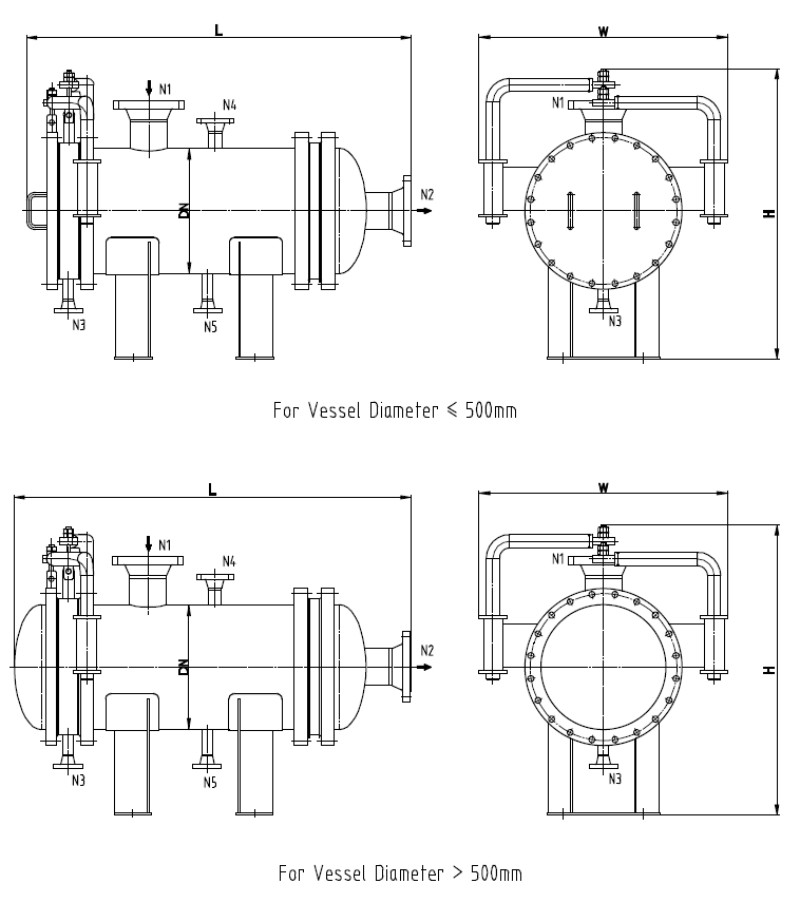
Model and Specification
Model |
SXF20-W.50 |
SXF40-W.80 |
SXF75-W.100 |
SXF125-W.150 |
SXF195-W.200 |
SXF270-W.200 |
SXF370-W.250 |
SXF450-W.250 |
SXF550-W.300 |
Applicable Capacity |
≤20 |
20~40 |
40~75 |
75~125 |
125~195 |
195~270 |
270~370 |
370~460 |
460~550 |
Vessel Diameter |
DN250 |
DN300 |
DN400 |
DN500 |
DN600 |
DN700 |
DN800 |
DN900 |
DN1000 |
Main Connection Dimensions (mm) | |||||||||
Inlet |
DN50 |
DN80 |
DN100 |
DN150 |
DN200 |
DN200 |
DN250 |
DN250 |
DN300 |
Water Outlet |
DN50 |
DN80 |
DN100 |
DN150 |
DN200 |
DN200 |
DN250 |
DN250 |
DN300 |
Oil Reject |
DN15 |
DN20 |
DN25 |
DN40 |
DN40 |
DN50 |
DN50 |
DN50 |
DN80 |
L |
1520 |
1580 |
1600 |
1700 |
1900 |
2000 |
2100 |
2200 |
2300 |
W |
680 |
700 |
800 |
940 |
1050 |
1170 |
1270 |
1370 |
1470 |
H |
1000 |
1050 |
1200 |
1300 |
1400 |
1650 |
1750 |
1900 |
2000 |
Note:
① The above are the parameters of the standard product. Customization is available.
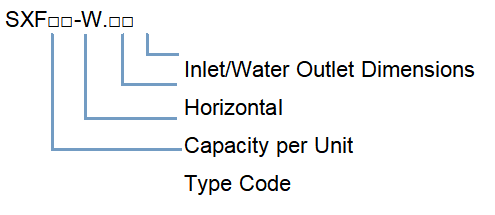
② Model description:
Applications Fields
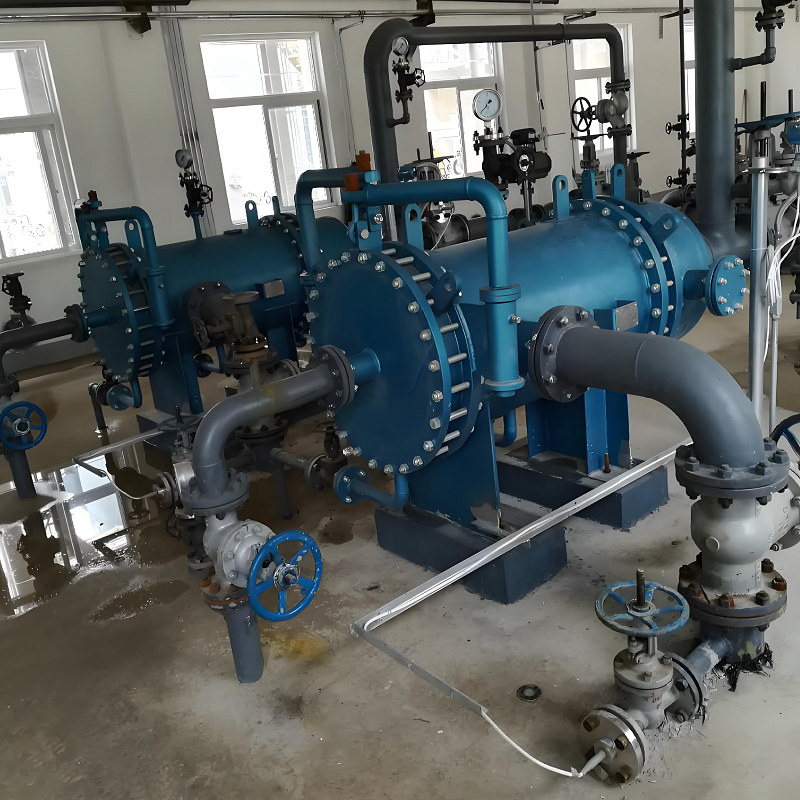
The Liquid-liquid Hydrocyclone can perform multiple operations such as liquid purification, concentration, and classification. It is applied in industries including petrochemical, fine chemical, food processing, pharmaceutical, and environmental protection.
• Hydrocyclone deoiling of produced water on offshore platforms:It is used for cyclonic oil removal from produced water in oilfield extraction with an oil concentration ≤2000mg/L. The treated water can meet the 50-100mg/L discharge requirement.
• Hydrocyclone deoiling for oily wastewater treatment in petrochemical plants
• Hydrocyclone deoiling in the coking unit cooling water treatment system for needle coke projects
• Hydrocyclone separation of two immiscible liquids in the chemical industry
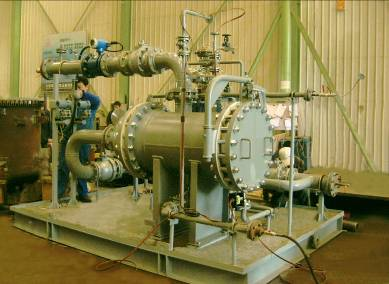
Some Products in Factory
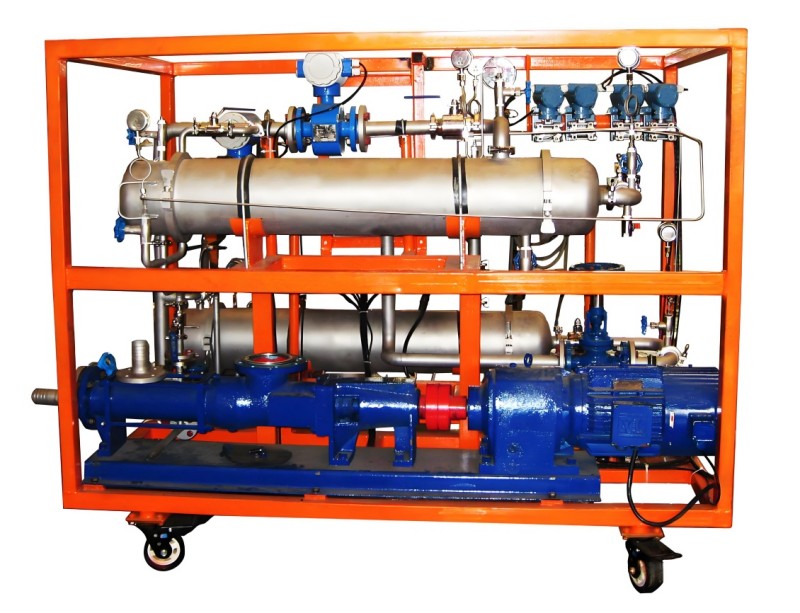
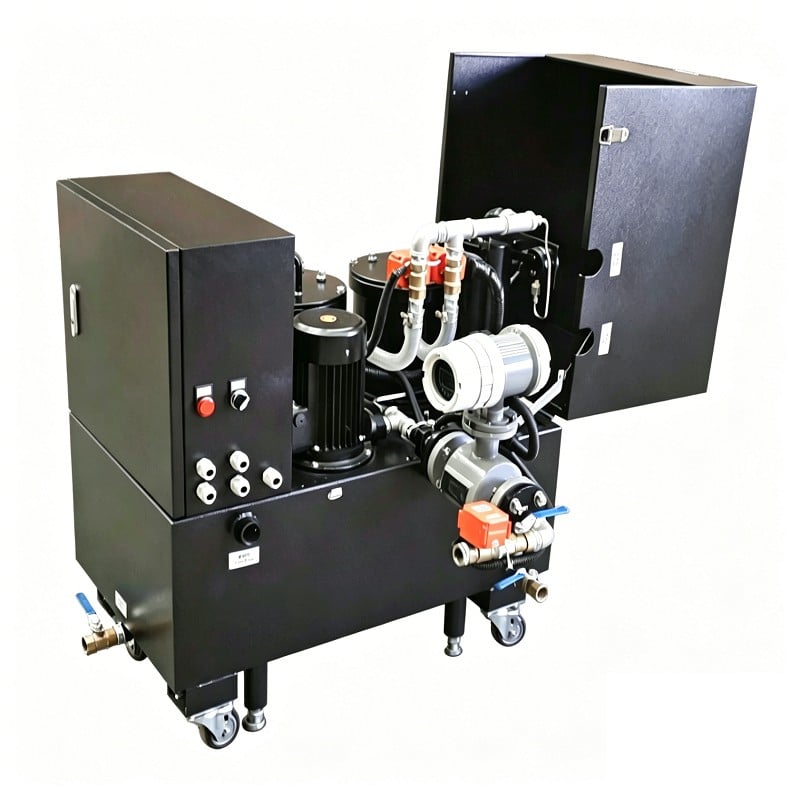
Deoiling Hydrocyclone Tester
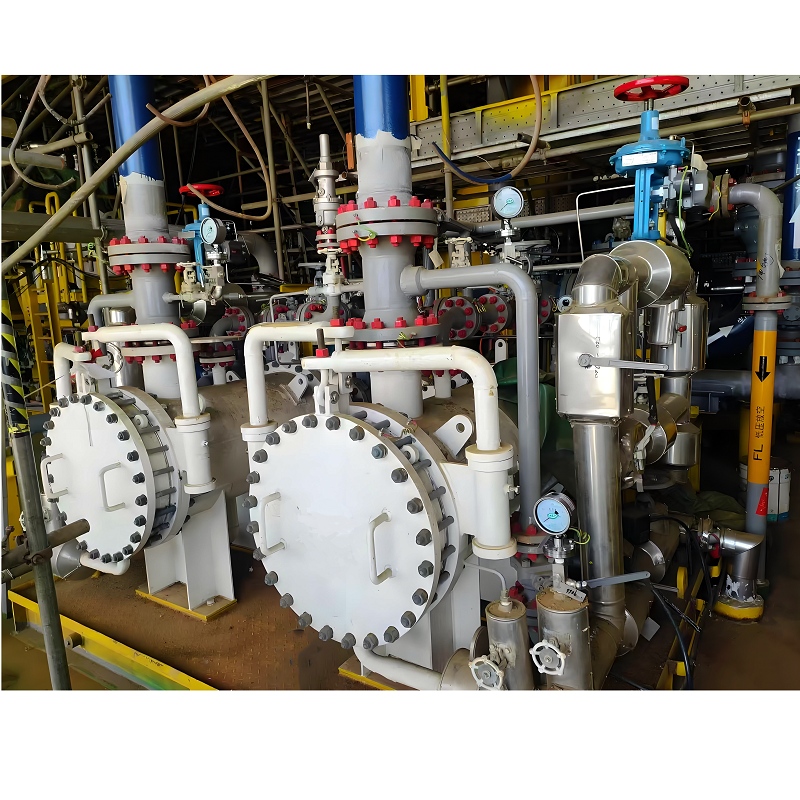
Some Products in Application Fields
 |
 |